

Jul 21, 2025
Plantation Roots and Pidgin Pride
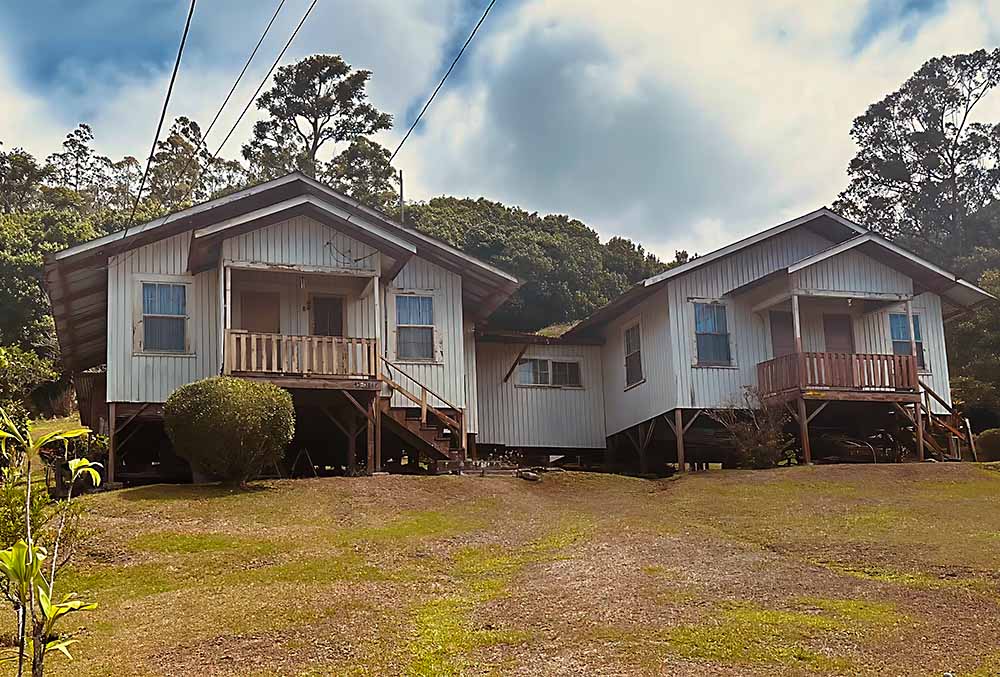
Holding on to Hawaiʻi’s Cultural Legacy Through Real Estate
Tucked away in the older neighborhoods across our islands are plantation-style homes that carry more than just architectural charm—they hold history, heart, and a language born of survival and shared connection: Hawaiian Pidgin.
The Plantation House: Humble Beginnings, Deep Roots
Originally built in the late 1800s and early 1900s, these homes were created for the immigrant laborers who worked at the sugar and pineapple plantations. Simple in form—single-wall wooden structures, wide lanais, corrugated metal roofs, raised off the ground to help cool the space—they were made to be practical, not fancy.
But beyond their structure, these homes became something much more: spaces where families grew, neighbors looked out for each other, and a sense of ‘ohana was simply part of everyday life.
Growing up in my grandparents’ plantation community, I remember how every home told its own story. You knew who lived where, and there was always a sense of familiarity and love. Aunties would gather outside, “talking story” until the sun set. Uncles passing by might’ve yelled, “You pau school?” or “Come, we get choke mango fo’ pick!”
Back then, we didn’t think of it as something special. It was just home. Now, working in real estate and watching Hawai‘i evolve, I’ve come to see these homes – and the way we spoke in them as treasures that deserve to be honored and preserved.
Hawaiian Pidgin: The Language of Everyday Life
In those homes and communities, something else was being built—a shared language. Hawaiian Pidgin, or Hawai‘i Creole English, didn’t come from textbooks. It came from real life: from porch conversations, after-school games, dinner tables, and long days in the fields.
It was how we connected, no matter our background. Japanese, Filipino, Portuguese, Chinese, Hawaiian—we all found a way to communicate, and that way became Pidgin.
Even now, though I often speak Standard English with clients, when I’m with family or run into old friends, it’s natural to slip back into Pidgin. “Eh! How you?” “Uncle, try pass me dat.” “We go beach!”
It’s more than just how we talk—it’s how we feel, how we relate. And within those old plantation walls, Pidgin helped shape not just language, but identity.
Some everyday Pidgin you might hear:
- “You pau hana?” = Are you done working?
- “We go eat grindz.” = Let’s get some food.
- “Dat one mo’ bettah.” = That one’s better.
Pidgin is playful, practical, and powerful. It carries the history of the islands and the heart of its people.
Living Legacy in Today’s Market
For local families and newcomers who appreciate the deeper meaning behind these homes, owning a plantation-style house—whether up mauna (mountainside) or makai (oceanside)—isn’t just a real estate decision. It’s about carrying forward a piece of living history.
These homes reflect the values that have long defined life in Hawai‘i: closeness, culture, and community. And while they may be modest in size, they’re rich in meaning.
More and more, I see buyers drawn to their charm—not just for the aesthetics, but because these homes offer something irreplaceable: a connection to the past, and a reminder of what matters most.
Restoring a plantation home isn’t just about fixing up wood and windows—it’s about honoring those who came before. It’s about preserving the spaces where Pidgin flowed freely, where folding tables were full of food and family, and where pride in local roots was passed down, one story at a time.
Final Thoughts: Where Language, Home, and History Meet
Plantation homes. Pidgin talk. Island upbringing. They’re not separate parts of Hawai‘i’s story—they’re woven together.
Whether you’re buying your first home, selling a beloved family property, or simply admiring from afar, remember: Hawai‘i’s homes are more than structures. They’re storytellers.
And some of the most meaningful stories are whispered through the wood of a plantation house—echoing with laughter, shared meals, and the sound of Pidgin spoken straight from the heart.